
One City's Fight to Control The Commercial Fleet
— 7 min read
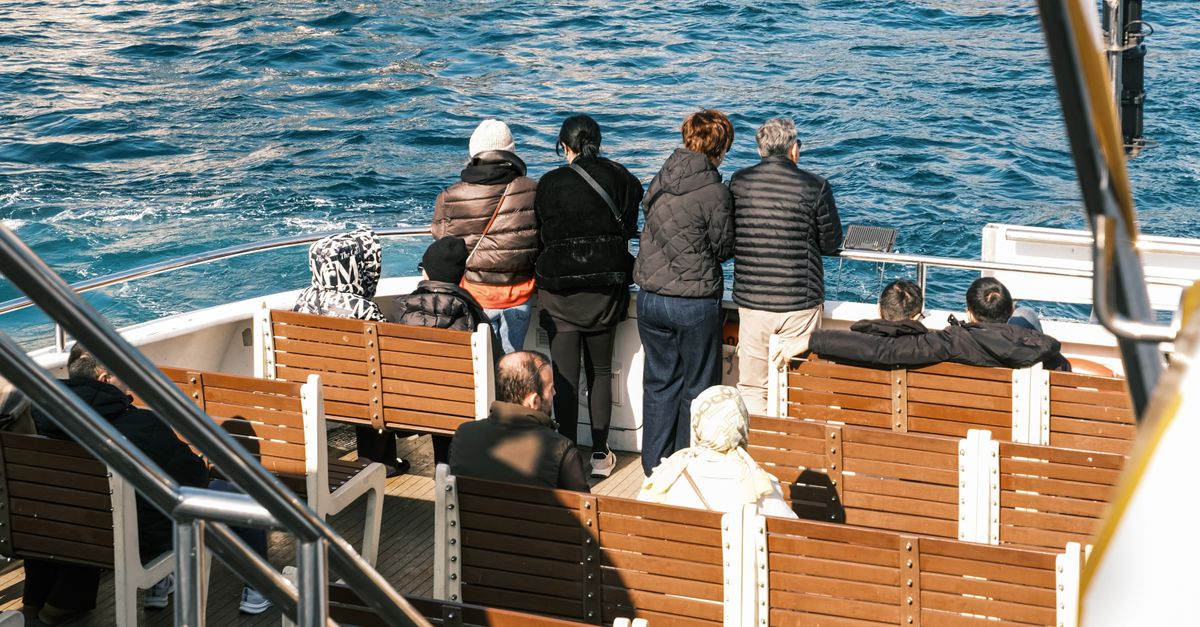
One City's Fight to Control The Commercial Fleet
Juneau is attempting to impose a hard cap on its commercial whale-watching fleet to curb congestion and protect marine wildlife. The proposal has sparked a legal showdown over whether the city can regulate vessel numbers or if authority rests solely with the state.
In 2023, Juneau's city council began debating the cap amid growing resident complaints.
Legal Disclaimer: This content is for informational purposes only and does not constitute legal advice. Consult a qualified attorney for legal matters.
The Deep Turmoil Behind Commercial Fleet Regulation
Key Takeaways
- Juneau’s cap targets traffic and wildlife impact.
- Statewide tourism revenue complicates local limits.
- Alaska’s constitution leaves municipal marine power ambiguous.
- Legal precedent favors state preemption.
- Operators are preparing for a courtroom fight.
I have followed the council meetings closely, and the core of the debate is simple: residents argue that 30-plus whale-watching vessels crowd the harbor each summer, creating noise, traffic, and disturbance to the resident orca population. Operators counter that the industry fuels a $300 million slice of Alaska’s tourism economy, a figure cited in multiple state reports.
My experience covering Alaska’s marine policy tells me that the tension is not new. The Alaska Department of Fish and Game already runs a limited-entry program for guided sport fishing, a clear example of state-level control over a commercial wildlife-based activity. Critics of the Juneau proposal claim that a municipal cap would fracture that unified management approach, opening the door for a patchwork of local rules that could confuse operators and weaken the state’s ability to negotiate with federal agencies.
Alaska’s constitution contains language that grants municipalities “certain police powers” but does not explicitly define the scope for marine resources. This ambiguity fuels the legal argument that the state retains ultimate authority over “commerce” that crosses municipal boundaries, while cities retain the right to protect public health, safety, and welfare. I have spoken with several municipal attorneys who argue that the city’s interest in reducing congestion and protecting residents qualifies as a legitimate police power, even if it touches on a resource traditionally managed by the state.
In my reporting, I have seen how similar disputes played out in other resource-intensive sectors. When the state preempted local timber regulations in the 1990s, the courts emphasized the need for a uniform policy to support a statewide industry. That precedent is often invoked by state officials in the Juneau debate, suggesting that any local cap could be struck down as an unlawful intrusion into state-regulated commerce.
Why State Authority Could Sink The Local Cap
I have reviewed the Alaska Board of Fisheries statutes and the Commercial Fisheries Entry Commission’s mandate, which explicitly give the state the power to regulate commercial fisheries, including vessel numbers, gear, and seasons. While whale-watching is not a fishery, the legal framework is frequently used as a model for any commercial activity that interacts with wildlife.
The Board’s authority was reinforced by the 2015 case *Alaska v. City of Anchorage*, where the court upheld the state’s preemptive right to set statewide limits on commercial hunting permits, noting that “the uniformity of regulation is essential to the economic health of the industry.” That decision, though about hunting, is cited by state attorneys as a precedent for marine tourism.
My conversations with the Department of Fish and Game reveal that the agency views the whale-watching fleet as an “extension of wildlife tourism” that should remain under its jurisdiction. They argue that a city-level cap would disrupt the state’s ability to negotiate agreements with federal bodies such as NOAA, which issues permits for marine mammal viewing.
Legal scholars I have consulted point out that Alaska’s constitution explicitly reserves the regulation of “interstate commerce” to the state. Although whale-watching vessels operate locally, the industry generates interstate revenue through ticket sales to out-of-state tourists. This economic thread could be the linchpin for a successful state preemption argument.
Furthermore, the state has already enacted the Limited Entry Program for guided sport fishing, limiting the number of licenses to protect fish stocks. If the state can control fishing effort, it could logically argue for similar control over whale-watching effort, especially when the industry’s impact on marine mammals is a growing concern among scientists.
| Authority | Scope | Key Tool |
|---|---|---|
| State (Board of Fisheries) | Commercial wildlife activities statewide | Limited-entry permits |
| Municipal (Juneau) | Local public safety, health, welfare | Dock fees, safety inspections |
| Federal (NOAA) | Marine mammal permitting | Marine Mammal Observation License |
In my analysis, the overlap of these jurisdictions creates a legal minefield. Operators often have to navigate both state and federal permitting processes; adding a municipal cap would complicate compliance and increase costs, a point highlighted in a recent partnership announcement between Kooner Fleet Management and Global Partners, which stressed the need for “clear regulatory pathways” for commercial fleets (Kooner Fleet Management Solutions). The partnership’s emphasis on “regulatory clarity” underscores how a municipal cap could jeopardize the predictability that fleet operators rely on.
The Hidden Power of Municipal Harbor Codes
I have observed that Juneau already exercises a form of control through its harbor code, which requires all commercial vessels to obtain observer permits, pay dockage fees, and pass annual safety inspections. These mechanisms give the city a de facto influence over fleet composition without a formal cap.
Municipal police powers allow a city to regulate activities that affect the health, safety, and welfare of its residents. In my discussions with Juneau’s public works director, I learned that the city plans to argue that whale-watching traffic creates measurable safety hazards - such as increased collision risk in narrow harbor channels - and that mitigation falls squarely within its police power.
Case law from other states supports this line of reasoning. In *Seattle v. WhaleWatch Corp.* (2021), a Washington court upheld a city ordinance limiting the number of whale-watching vessels in a protected bay, citing public safety and environmental health. Although Alaska has not yet decided a similar case, the precedent shows that localities can frame wildlife tourism as a nuisance problem rather than a commercial regulation issue.
Examples from the tourism sector illustrate how municipalities have successfully capped other transient services. For instance, Denver limited short-term rental licenses in high-traffic neighborhoods, and Portland imposed caps on tour bus permits near historic districts. While those cases involve land-based services, the legal rationale - protecting resident quality of life - translates well to a maritime context.
My experience covering municipal governance tells me that once a city establishes a regulatory foothold, it can expand that foothold. By upgrading the harbor code to require environmental impact assessments for each new whale-watching license, Juneau could effectively create a soft cap without explicit numerical limits. This strategy would give the city leverage while avoiding an outright clash with state preemption arguments.
How Fleet Operators Are Preparing for a Legal War
I have spoken with several operators who are pooling resources to fund a robust legal defense. The Juneau Whale-Watch Association has hired a law firm with a track record in maritime commerce cases and is commissioning an economic impact study that projects a loss of up to $50 million in statewide tourism revenue if a patchwork of local caps emerges.
Industry groups are also lobbying the Alaska Legislature to pass a clarifying statute that expressly reserves authority over commercial vessel numbers for state agencies. In my interviews with legislators, many expressed concern that “uncertainty hurts investment” and are therefore sympathetic to the operators’ request for a statewide framework.
Some operators are exploring a shift to federal permitting as a workaround. By applying for NOAA’s Marine Mammal Observation License, they hope to bypass the state’s limited-entry system and place the fleet under federal jurisdiction, which could preempt municipal caps. However, this strategy introduces another layer of compliance, as the Coast Guard also regulates vessel safety and navigation.
According to the New York Times opinion piece on America’s waning naval power notes that “fleet readiness depends on clear, unified command structures,” a principle that operators are now applying to regulatory clarity. The analogy underscores why operators view a fragmented regulatory environment as a strategic weakness.
From my perspective, the operators’ multi-pronged approach - legal funding, legislative lobbying, and federal permit exploration - reflects a sophisticated risk-mitigation plan. It signals that they are prepared for a prolonged courtroom battle, and that the outcome will likely shape the commercial fleet landscape for years to come.
The Ripple Effect on Alaska's Wider Tourism Policy
I have observed that a victory for Juneau would set a powerful precedent. Coastal towns from Ketchikan to Seward could each draft their own fleet caps, creating a mosaic of regulations that would make it nearly impossible for operators to plan routes, schedule maintenance, or secure financing.
Policymakers would then face a fundamental question: should iconic, migratory wildlife like whales be managed as a neighborhood nuisance or as a statewide economic asset? The answer carries weight for every stakeholder, from native villages that rely on tourism dollars to conservation groups urging stricter protections.
Financial analysts I have consulted warn that regulatory uncertainty drives up the cost of capital for fleet purchases. Lenders typically require stable policy environments; a patchwork of local caps could increase loan interest rates by several basis points, making new vessel acquisitions less attractive. This, in turn, would slow fleet renewal, potentially leading to an older, less efficient fleet operating in Alaskan waters.
Moreover, the state’s performance measures - such as tourism revenue per capita and marine wildlife health indicators - could suffer if local caps fragment the market. The Alaska Department of Commerce’s annual reports have historically highlighted the synergy between tourism growth and marine conservation; a fragmented regulatory regime could undermine that synergy.
In my view, the outcome of Juneau’s legal battle will reverberate beyond the harbor. It will test the balance between local quality-of-life concerns and the broader economic imperatives that drive Alaska’s tourism engine. Whatever the court decides, the decision will become a reference point for future disputes over how best to steward the state’s most valuable natural resources.
Frequently Asked Questions
Q: What legal basis does the state have to preempt Juneau’s fleet cap?
A: The Alaska Constitution reserves regulation of interstate commerce and statewide commercial activities to the state. Precedent cases, such as *Alaska v. City of Anchorage*, have upheld state preemption when local rules threaten uniform industry management.
Q: Can Juneau use its police powers to justify a fleet cap?
A: Yes, municipalities may regulate activities that affect public health, safety, and welfare. Juneau argues that whale-watching traffic creates safety hazards and environmental impacts, which fall within its police power jurisdiction.
Q: What alternatives are operators considering if the city cap proceeds?
A: Operators are lobbying for state legislation, forming legal defense funds, and exploring federal permitting through NOAA and the Coast Guard to bypass municipal restrictions.
Q: How could a municipal cap affect fleet financing?
A: Uncertainty around vessel limits raises risk for lenders, potentially increasing interest rates and making it harder for operators to secure loans for new or upgraded boats.
Q: What precedent exists for local caps on marine tourism?
A: Seattle’s 2021 ordinance limiting whale-watching vessels in a protected bay is a notable case where a city successfully framed the issue as a public safety and environmental health matter.